Click on the audio player above the hear the audio story for this blog.
Australia’s Snow Playground is an extract from my soon to be released book “What the road teaches”. It’s a travel memoir through New South Wales by motorcycle and through Australia less known history. If you want to read my other books click to following links to my web page: Digital Swaggie Books
Finding Australia’s Snow Playground
I’ve decided to take the opportunity of being in the South East of New South Wales to visit Australia’s Snow Playground. Outside the window, the grass had turned a light brown. It was dry and almost desolate, while crystal-clear streams seemed to run silently through small valleys, past rows of deciduous trees that would look spectacular in summer.
A small town appeared. The town was called Berridale, sitting at an important junction between old transport routes, probably once a stagecoach changeover stop. It had modern motels, cafés and a pub.
Is this life after 60
Grey nomads had pulled up. There were about four big rigs, large four-wheel drives towing them. The people looked happy. One woman, presumably the wife, held a small white dog which occasionally yapped at three other dogs, which in turn yapped back. Almost like a conversation where no one was listening.
It seemed like a metaphor for modern Australian retirement. Grey-haired people wandered between the tables, shivering in their winter clothes and clutching hot, steaming cups of coffee and tea. I reflected on my own retirement plans.
Retirement is not a good word
I couldn’t help feeling the word retirement was all wrong. I loved pottering around, looking at art and the work of artisans, past and present. But that wasn’t all my life was going to become. I’d always thought that no matter what you’ve seen or where you’ve been, there’s always another mountain to climb.
Memories of snow – the first time
With that thought sitting in the back of my mind, I kept going, heading further into the Snowy Mountains towards Jindabyne and then the ski fields of Perisher and Thredbo. Mountains have always drawn me in. The sheer size and magnificence of them is awe-inspiring. But my fascination with snow goes back to the first time I experienced a blizzard in Yorkshire, England.
During the night, the wind howled and the snow battered the windows. I was cold, even in my duffle jacket. It was unlike any cold I’d experienced before. Even the cold days in Wellington, where I was born, hadn’t felt this cold. At some point during the night, the wind dropped. A stillness filled the air and I fell asleep.
When I woke, I ran outside, quickly discovering that snow was cold. I returned almost immediately to put some shoes on. The garden was blanketed in white. The usually dark-green hedge was covered in snow and crystals. It was a magical landscape. For a young man who had never seen snow, it was like a fairy tale.
Jindabyne
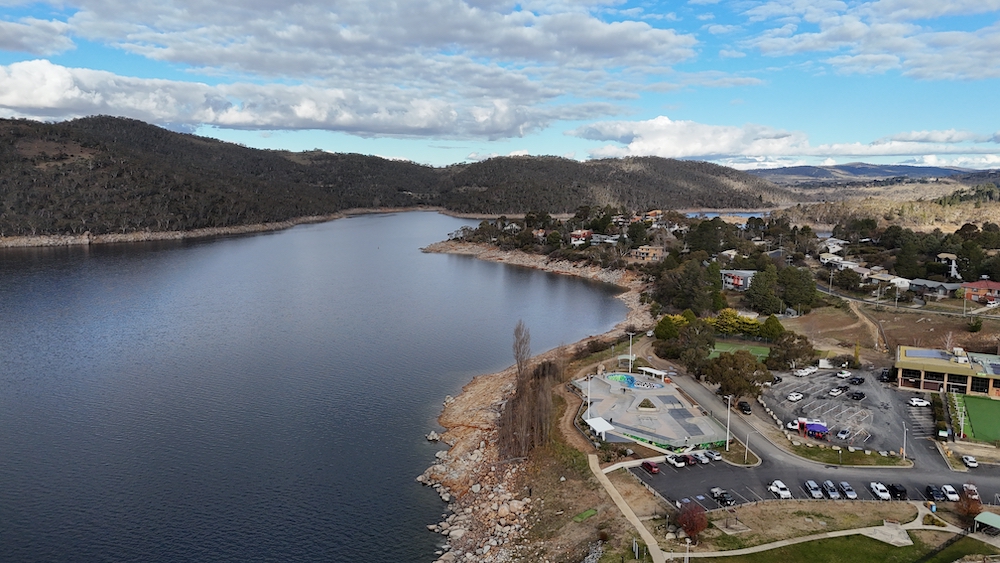
It’s interesting how certain memories become embedded in your psyche. Snow still excites me, even after all this time. I was brought back to reality as I passed a sign indicating North Jindabyne. Twenty minutes later, I got my first glimpse of Lake Jindabyne. It spread out to my right like a deep, dark shadow. On one side were steep, forested hills; on the other, sparse plains of the high country.
Jindabyne was stark and cold, and the lake was grey and uninviting. I was pretty sure that if I went for a swim, I’d die of exposure in minutes. On the far banks, bare earth contrasted beautifully with the deep-grey water. It looked cold, but somehow artistic.
The multi cultural experiment
The story of the Snowy Mountains Scheme is one of successful immigration and engineering brilliance. Snowmelt is captured and channelled through turbines to generate electricity, and the water can then be pumped back into the system. The town I was looking at was relatively new. The original Jindabyne had been flooded when the dam filled.
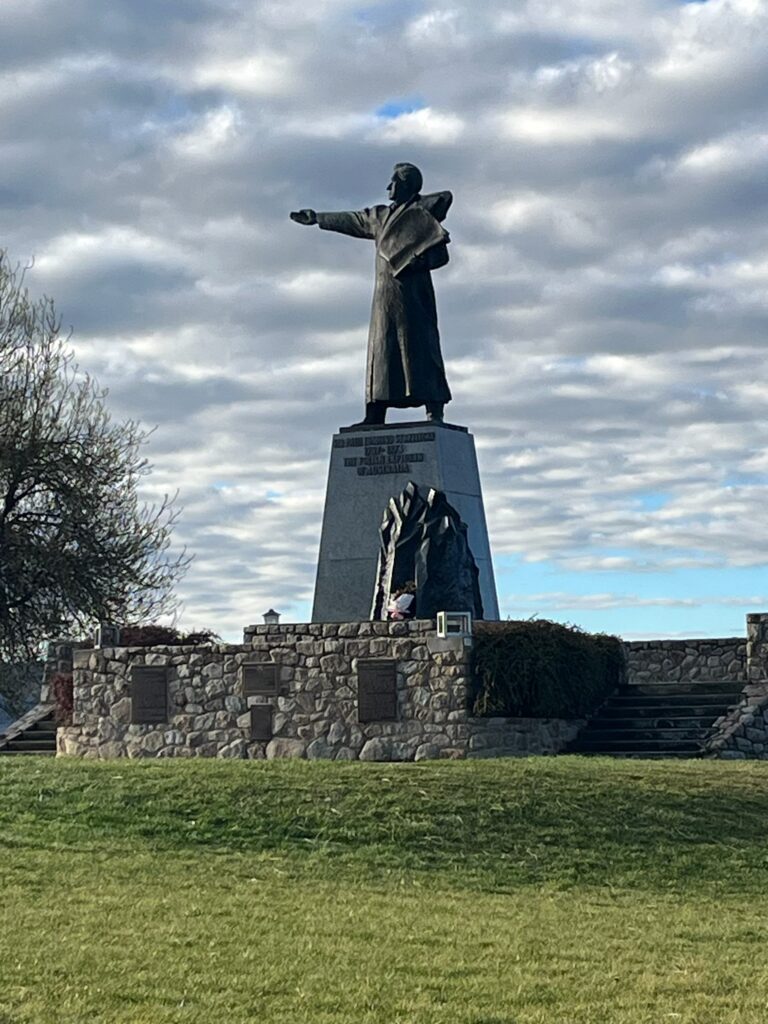
There was also a giant bronze monument to Sir Paul Edmund Strzelecki, the Polish immigrant, explorer and surveyor who climbed Australia’s highest peak, Mount Kosciuszko. I couldn’t help looking up at the enormous statue. Was this an extravagant display of appreciation, or was Strzelecki genuinely that tall?
The more I travelled across Australia, the greater my appreciation became for what the explorers and their companions had achieved. It was hard not to believe that whatever wealth they might have accumulated was insignificant compared with the thrill of adventure and discovery. I wondered if Strzelecki would have approved of a twenty-foot statue in his honour.
Climb a mountain
I knew from my earliest memories of seeing a mountain and wondering what the view looked like from the top that discovery was what motivated me to take another step when the physical desire told me to stop. I felt at home at Jindabyne. It reminded me of the days and weeks I’d spent around Ruapehu and Tongariro National Park in New Zealand.
It was stark and cold, but full of the promise of adventure. I was in my element. I was exploring, travelling and observing. But the feeling was different in a car than it was on a motorcycle. It seemed easier. Rather than an explorer, I felt like a tourist.
Car Touring vs Motorcycle Touring
In a car, you just hop out, lock the doors and go exploring. You can take a full camera setup. On a motorcycle, you have to take off your helmet and gloves and find somewhere to secure them before you venture out. The advantage of a motorcycle is that you’re nimble on the road. The advantage of a car is utility. And, of course, warmth. I headed towards Perisher.
There were cameras everywhere at the entrance to the National Park. Lest you channel your inner Captain Thunderbolt and shoot your way through, you had to stop and pay the National Park fee.
It cost $29 to drive up the road and park. I realised that it wasn’t me who was the bushranger. It was the government. Maybe the bureaucracy had learnt a few things from the early days of bushrangers. For detailed information on the state of the road through the Kosciuszko National Park check out the following link: Kosciuszko National Park
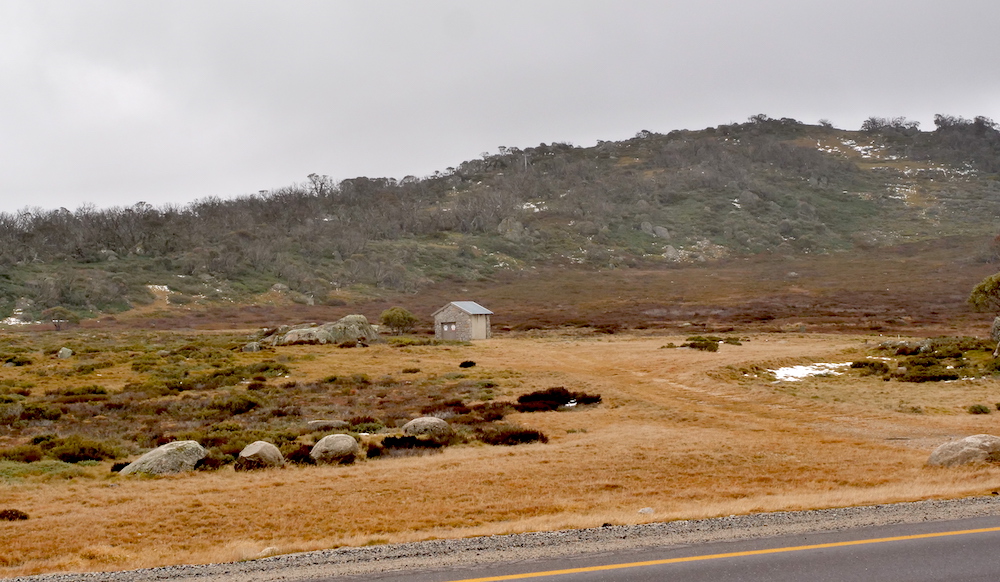
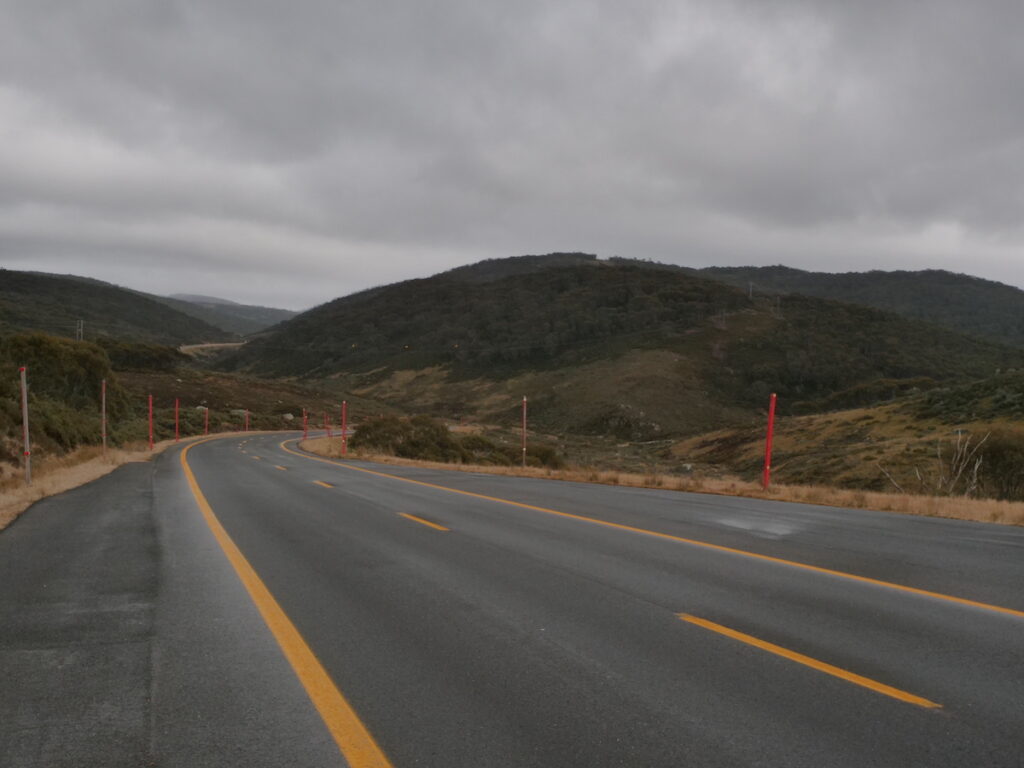
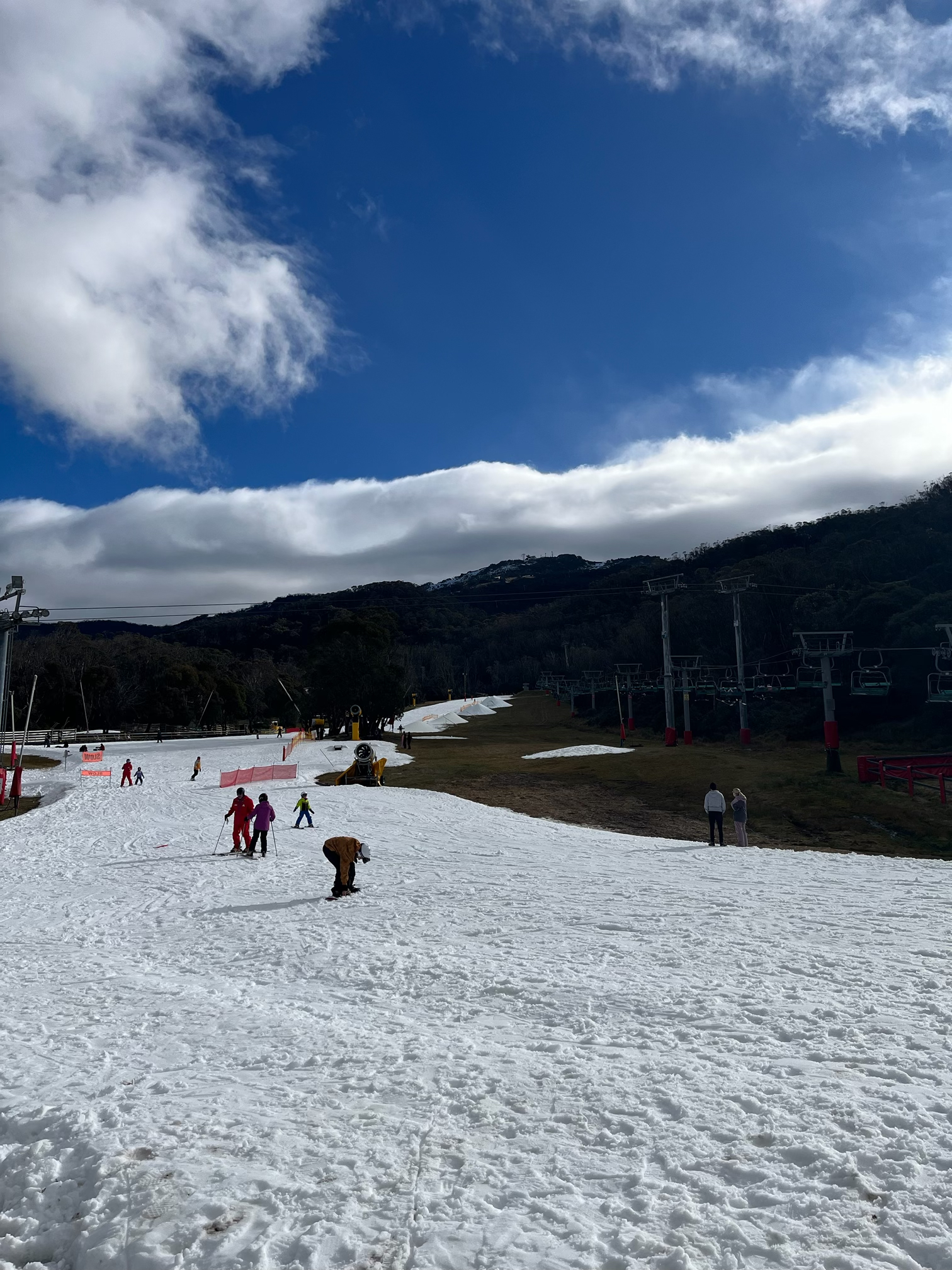
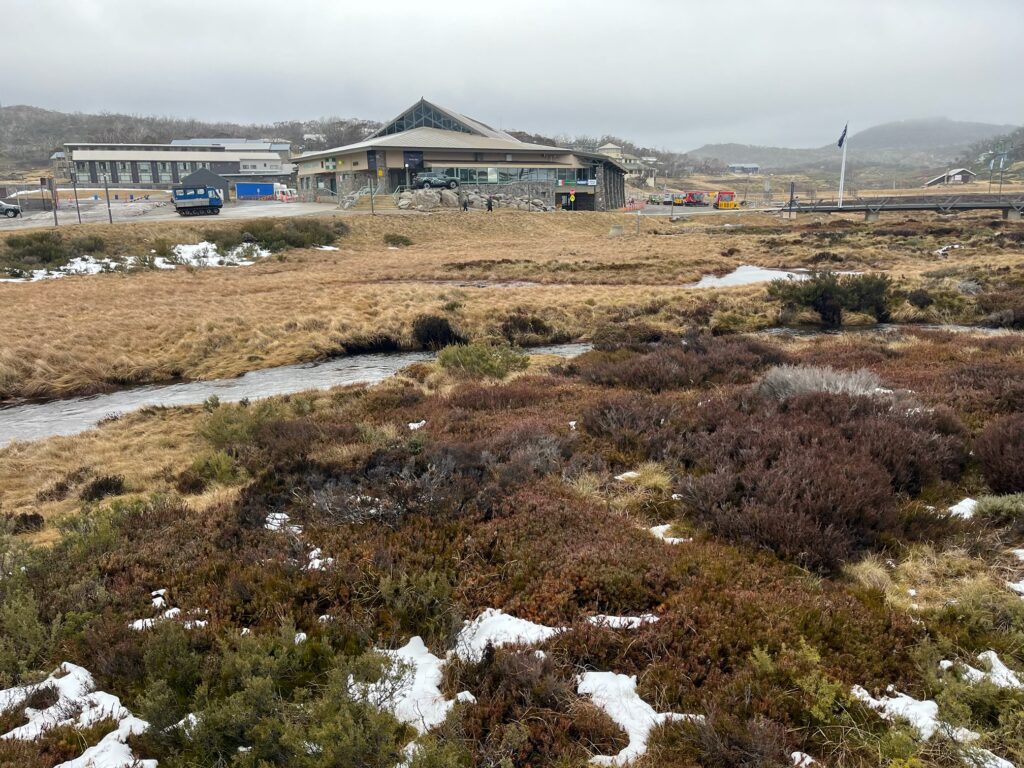
I had to reluctantly admit, however, that there was a lot of work involved in keeping the road clean and the wombat carcasses off that pristine road. Like the cassowaries in North Queensland, the wombats hadn’t learnt to read signs either. As I climbed higher, the forest gave way to alpine country. There was snow lying in patches beneath banks where it had been protected from the sun.
The roof top of Australia
I stopped to take a photograph beside a set of orange depth-marker poles. They were at least three metres high. Overkill for the small patches of snow around me, but probably just adequate in a good season. The road reminded me of old Subaru advertisements. I’d always wondered where they were filmed. Now I thought I knew. I eventually came over a rise and saw the Perisher complex below.
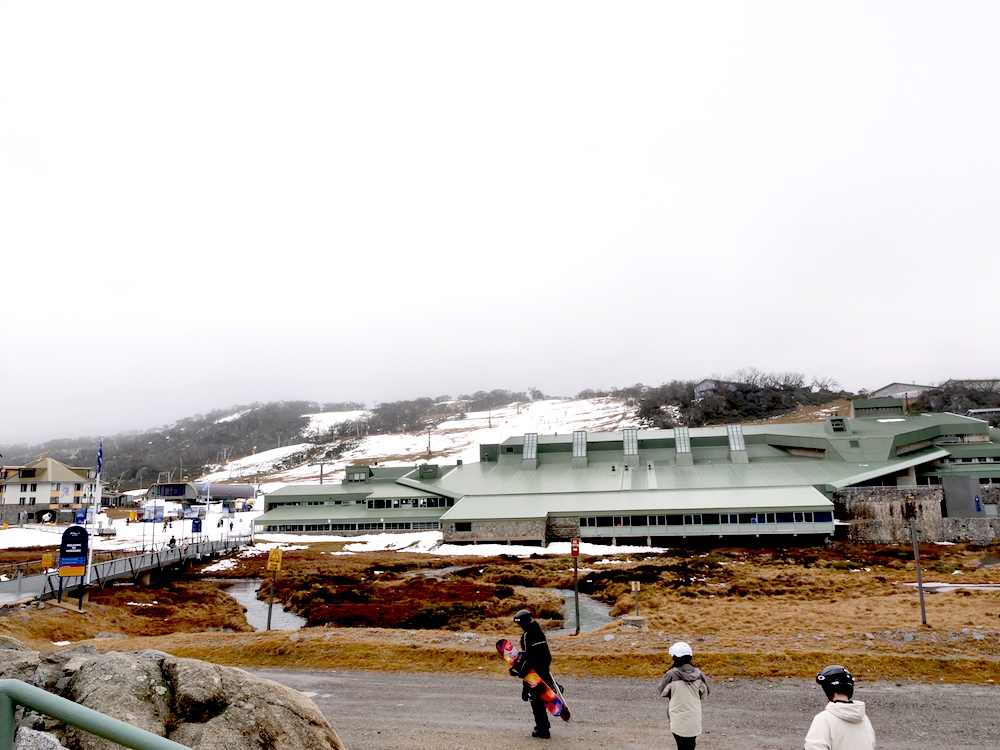
It looked like one of those evil-villain bunkers you see in James Bond movies. Massive. Stark. Concrete. Snow surrounded the buildings, except for the roads, car parks and ski runs. The small windows and grated walkways gave the place a futuristic military-base feel.
A shock to the system
For a North Queensland boy, this was foreign territory. I wrapped myself in my down jacket, woollen gloves and beanie and walked across the almost empty car park. There was enough snow to play on the slopes, but I couldn’t help feeling disappointed.
I had come all this way to see the Australian snowfields, yet I wasn’t skiing. The old memories came flooding back. I remembered taking my kids skiing in New Zealand. I remembered the excitement, the cold, the camaraderie and the ridiculous amount of money I’d once spent on skis, lift passes and après-ski entertainment. Looking up at the slope, there was a confidence in my ability to manage this even after all this time. I said to myself I could ski here. But I didn’t have the time or the money.
Back on the road
So I left Perisher and headed towards Thredbo. The road to Thredbo was different. It hung to the side of the valley, climbing steadily into the mountains. I passed camping areas and made a mental note to return in summer. I could ride these roads, camp beside the mountains and explore the tracks.
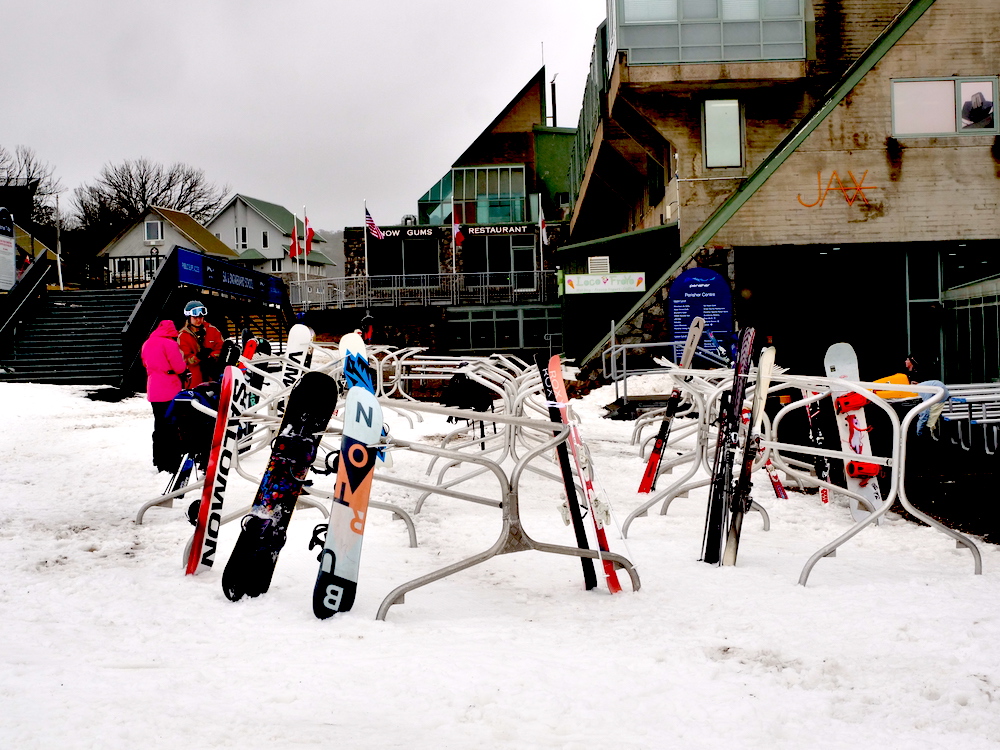
Then I saw the sign for Thredbo. I found a parking space and walked towards the village. It was smaller than I’d expected. A creek ran through the valley and snow covered the surrounding slopes. There were ski racks, restaurants, accommodation and the obligatory bar. I walked to the edge of the first run. Snow stretched up the steep slope towards the chairlift. I could ski here. Again, the thought came into my head.
What if?
I walked into the snow and felt it crunch beneath my boots. I bent down and made a snowball. Nearby, some kids were having a snow fight. I threw. I missed by metres. They looked at me, startled, then laughed. A moment later three snowballs whizzed past my head. Clearly, these kids had been practising. I disengaged. I was beginning to suspect that age had not improved my snowball-throwing abilities. As I walked back towards the car, I thought about the possibility of coming back. Perhaps I could spend a week here. Maybe longer. Perhaps I could buy some new skis. The idea began to grow.
I’d spent years doing what I thought I was supposed to do. Work. Build a career. Accumulate responsibilities. Eventually retire. But now?
Opportunity for a new life
With retirement and divorce, I had an opportunity to change direction and refocus on the life I wanted rather than simply continuing the life created by decisions I’d made years earlier. Perhaps this was another message. Think outside the box. Seek adventure. I’m fit enough. Strong enough.
Maybe I should buy a van, put Emu in a bike trailer and come down here for a month during the ski season. Ideas and opportunities began to swirl around in my head. The possibilities seemed endless. And I started thinking:
What if again?
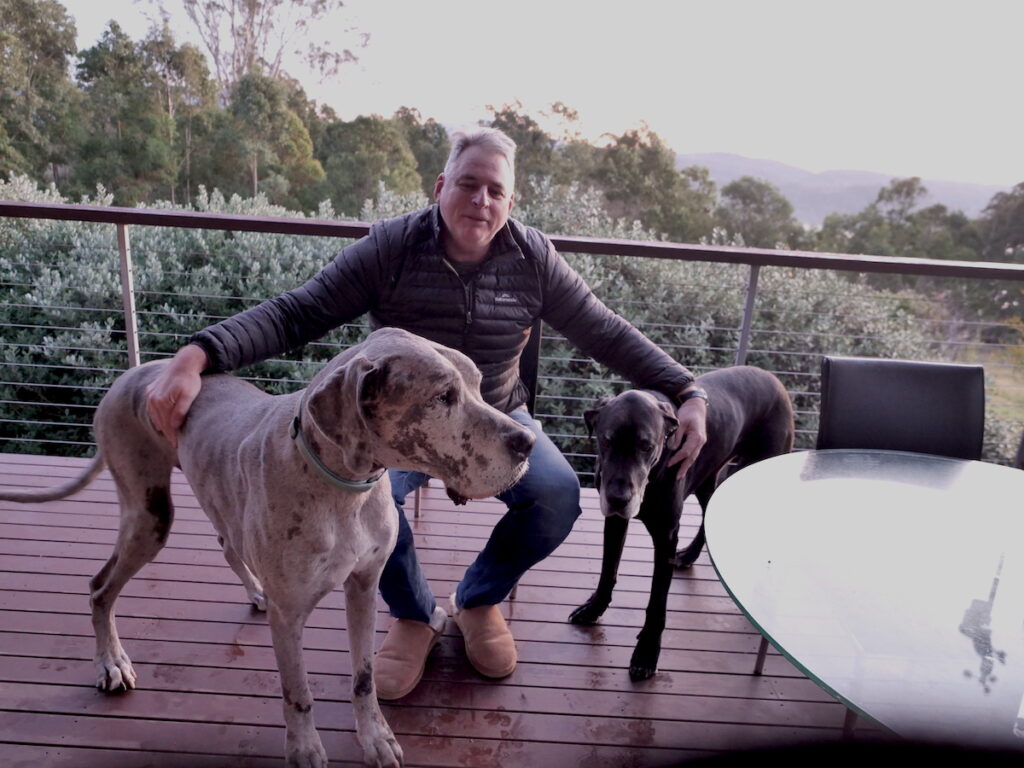
The drive home seemed to take less time than the drive in. By the time I reached Brogo, it was dark. The dogs had been left alone for most of the day and had apparently decided to express their displeasure by ripping apart their favourite sleeping mat and eating a whole jar of peanut butter. When I say dogs, I mean one dog. Leroy. The sixty-five-kilogram top dog. It was getting cold, so I built a fire and settled down with the dogs to watch television. Before long, it was time for bed.
I dreamed about my life as a ski instructor, teaching attractive blonde ski bunnies to ski. Then I was rudely awakened by a howling bark. “Wolf! Wolf! Woooooooolf!” I was pretty sure it meant: Look! A wombat! The light on the side of the house came on. Outside, two medium-sized wombats were grazing happily on the garden.
The wombat wars begin
I looked at my watch. Two-thirty in the morning. This was getting beyond a joke. I opened the door and turned the inside lights on. The dogs had their noses pressed against the windows.
They turned to look at me. “Wolf! Wolf! Woooooooooolf!”
Look, Gary! A wombat!
“Thanks,” I said.
They turned away as if acknowledging that I was happy with their night patrols. Dogs don’t understand sarcasm. If you’re interested in more of my adventures check out my current books: Gun Fights, Ghosts and Goannas or Red Dust and Rainforests
No responses yet